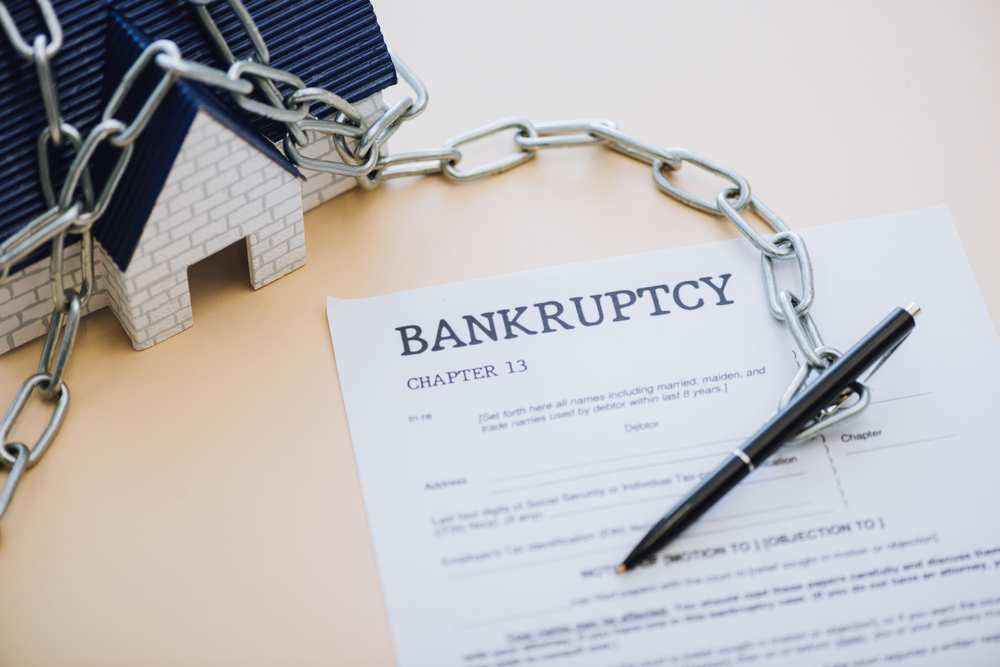
If you own a home and are thinking about bankruptcy, you may worry that filing will put your house at risk. That concern is common, but bankruptcy does not automatically mean losing your home.
Wisconsin law protects some home equity through the homestead exemption. If your equity falls within the protected amount, you may be able to keep your home while dealing with your debts.
Whether you can keep the house depends on factors such as how much equity you have, which bankruptcy chapter you file, and whether you can keep up with your mortgage payments. This guide explains how those rules work for Wisconsin homeowners.
Wisconsin’s Homestead Exemption Can Protect Your Home
Your home equity matters when you file bankruptcy. Equity is the home’s value minus what you still owe on the mortgage.
Under Wis. Stat. 815.20, Wisconsin protects up to $75,000 of home equity for a resident owner. Each spouse can claim the exemption on jointly owned property, giving a married couple up to $150,000 of protection.
For example, if your home is worth $310,000 and you owe $250,000 on the mortgage, you have $60,000 in equity. That falls within the $75,000 exemption for one homeowner.
Wisconsin filers can choose either the state or federal exemptions, but not both. The state homestead exemption is $75,000, compared with $31,575 under the federal exemption. For homeowners with substantial equity, the Wisconsin exemption may provide more protection.
Chapter 7 Can Let You Keep Your Home
Chapter 7 allows a trustee to sell property that is not protected by an exemption. If your home equity is covered by Wisconsin’s homestead exemption, you can generally keep the home.
You still need to make your mortgage payments. The exemption protects your equity, but it does not prevent foreclosure if you fall behind.
If your equity exceeds the exemption, the trustee could sell the home and use the unprotected equity to pay creditors. This is less common for homeowners with limited equity.
You can usually keep the mortgage and continue making payments. In some cases, you may also reaffirm the loan.

Chapter 13 Can Help When There Is A Problem To Fix
Chapter 13 can be a better option when Chapter 7 does not solve the problem.
If you are behind on your mortgage, Chapter 13 lets you catch up through a 3- to 5-year repayment plan. The automatic stay can also stop a pending foreclosure while the case is active.
Chapter 13 can also help if your home equity is higher than the homestead exemption. You may be able to keep the home by paying unsecured creditors at least the value of the unprotected equity.
In some cases, Chapter 13 may also allow a second mortgage lien to be removed when the home is worth less than the first mortgage.
|
Situation
|
Better fit |
Why
|
| Current on mortgage, equity protected |
Chapter 7 |
Fast discharge, keep the home |
| Behind on mortgage, want to catch up |
Chapter 13 |
Cure arrears over a 3 to 5 year plan |
| Equity exceeds the homestead exemption |
Chapter 13 |
Keep the home by paying the non-exempt value into the plan |
| Second mortgage on an underwater home |
Chapter 13 |
Possible lien stripping in limited circumstances |
Liens, Arrears, And Other Issues To Watch
A judgment lien may sometimes be removed under 11 U.S.C. § 522(f) if it interferes with your homestead exemption.
If you are behind on your mortgage, Chapter 13 may help you catch up. The homestead exemption does not stop foreclosure for missed payments.
You also must choose between Wisconsin and federal exemptions. You cannot combine them. See our guide to Wisconsin bankruptcy exemptions for more information.

Frequently Asked Questions
What if my equity is more than $75,000?
The amount above $75,000 is not protected for a single filer in Chapter 7. Chapter 13 may let you keep the home by paying the unprotected amount through the plan. Married couples filing jointly can generally protect up to $150,000.
I am behind on my mortgage. Can bankruptcy still save my house?
Chapter 13 can give you three to five years to catch up on missed payments. The automatic stay can also stop a foreclosure while the case is pending. See our guide to Chapter 7 versus Chapter 13 for more information.
Do I have to keep paying my mortgage during bankruptcy?
If you want to keep your home, you still need to make the mortgage payments during bankruptcy.
Does filing wipe out a judgment lien on my house?
It can in some cases. Section 522(f) may allow you to remove a judicial lien that interferes with your homestead exemption.
Get Help With Your Bankruptcy
If you are worried about losing your home, you do not have to figure out the rules on your own. Our attorneys can review your home equity, mortgage, and debts and explain what bankruptcy could mean for your home.
Contact Debt Advisors Law Offices to discuss your situation and learn about your options. Free consultations are available.
Sources